Altermagnets: what the heck are they?
Introduction: where do I fit into the picture?
Over the last month or so I've been working on extending Sitter to support a few different frameworks in physics which will be capable of simulating altermagnets.
My goal with that is not to choose any one direction of research. I think that the field is too new to begin choosing sides. I think it would be more useful to be able to choose all of them, in the same engine, and have the development of altermagnets be able to be tested within each one and see which ones it breaks and which ones agree and where exactly and why exactly for each of them.
I think the collective understanding of each of the frameworks and their expectations, limitations, base assumptions, and biases brought by the fields they are carried from are all useful information. I think none of them are complete, and none of them should be given priority.
One may turn out to be like newtonian physics, and be the most useful when you have room for small errors. There may be constants we have not yet discovered, which could later give us a far more accurate but still less generally useful answer. And to be honest, while I am smart enough to get involved in this part of things, I am not going to be one of the ones who comes up with new theory or math of my own. That's not me.
I can wrap my head around things, and I can fumble my way around the math until I can use it. But I consider differential calculus one of my weaker subjects. I enjoy it, and when it clicks, I thoroughly enjoy the feeling. But it takes everything I have to just understand what others have come up with, so, I will draw my line there. My point being, I have no place in the theory. I will not pretend otherwise.
My skill lies in my ability to understand these things just well enough to be able to use my actual skill: programming. Which gives me my useful niche: if I can understand it, I can create it as a function. I can program anything that I am able to conceptualize well enough to break it down into its simplest pieces that add up to create the whole. So I will not be imposing my beliefs on theoretical physics on the topic of altermagnets. I will be giving YOU a playground to test the theories which dominate the field, and once I've caught up all the way, will continue to add each new development as they come. Those more qualified to have opinions on the topic ought to have some good tools to work with.
I'm hoping for the honor of giving you Sitter to use as one of these tools.
A few days ago, I met a fellow programmer and nerd-folk out in the real world and we exchanged information and continued talking about nerd stuff. Eagerly, I'd shown her Sitter, and then told her about my plans involving altermagnets. It hadn't ever come up in a conversation before this point in my life. I was unprepared when she asked, "So... what the heck is an altermagnet? Can you give me the 101?"
I wasn't sure where to start. I figured I'd eliminate everything that was not an altermagnet first, and then it would make them easier to explain after...
... it was the inspiration I needed to write this. Thanks for taking an interest, Rachel! I'm very grateful.
Here was my reply:
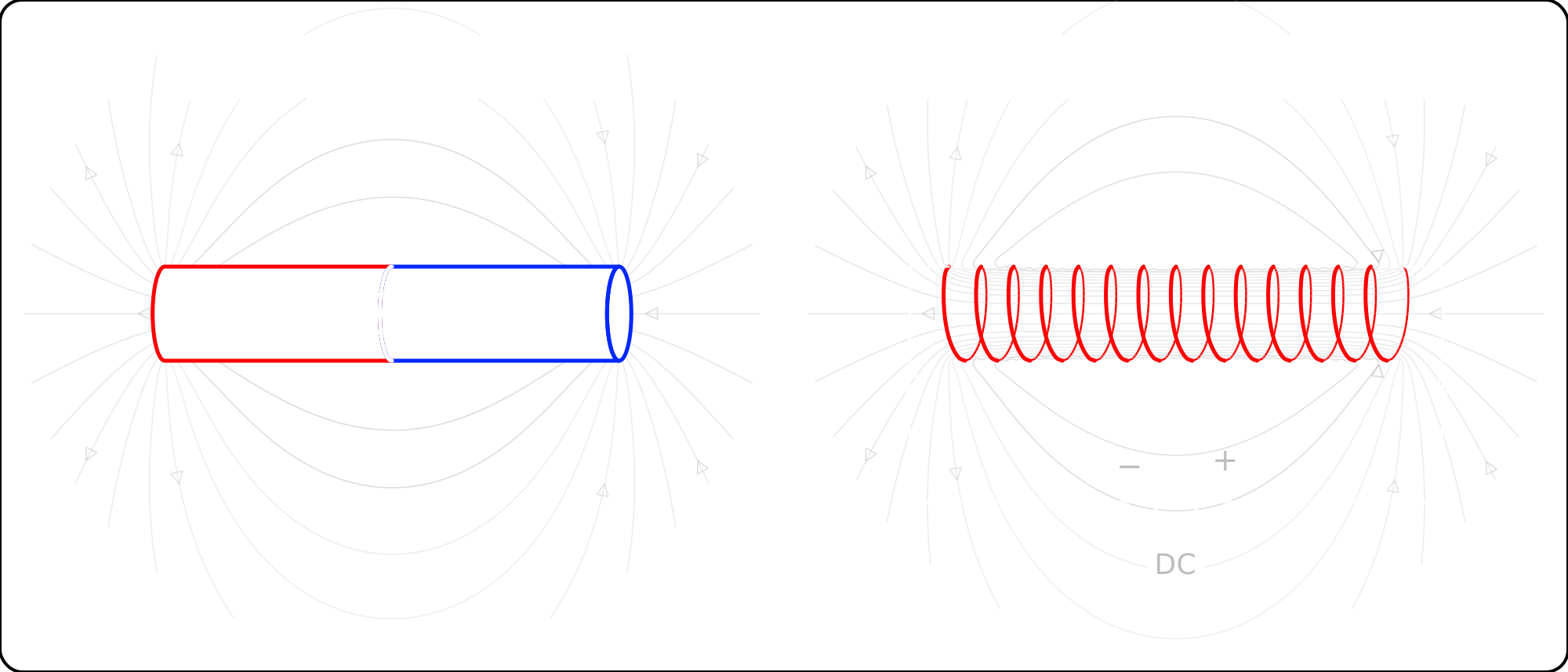
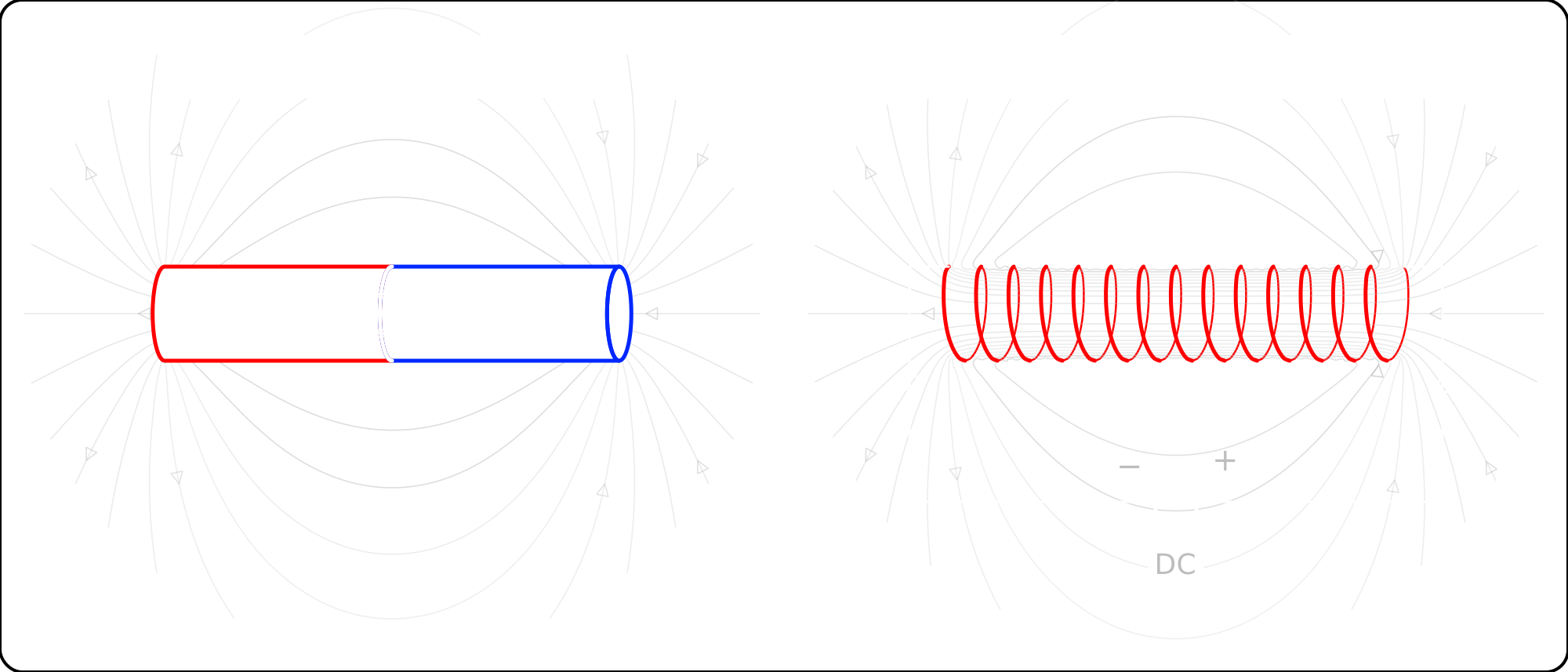
Well, you know how magnets have two poles? If you look at their fields, you’ll see how their flux radiates outwards from them both, rather than from the poles themselves.
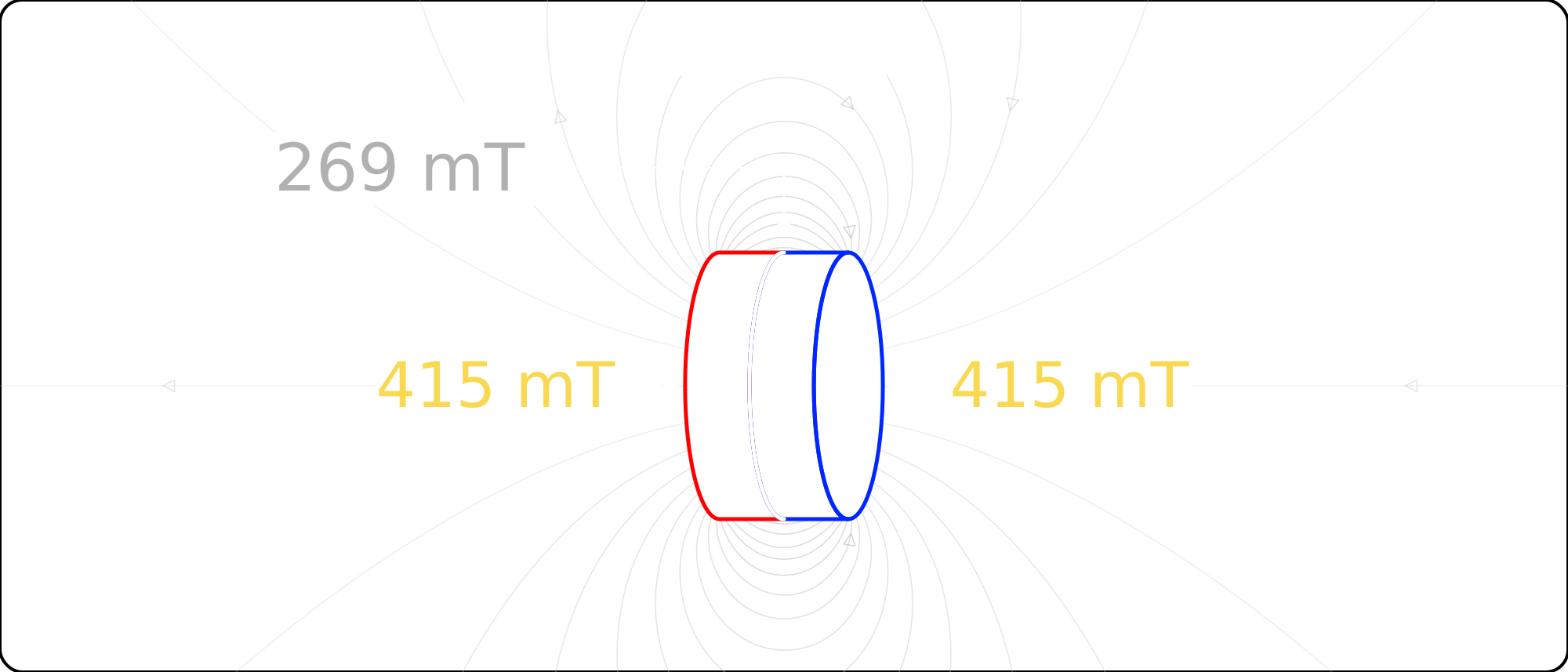
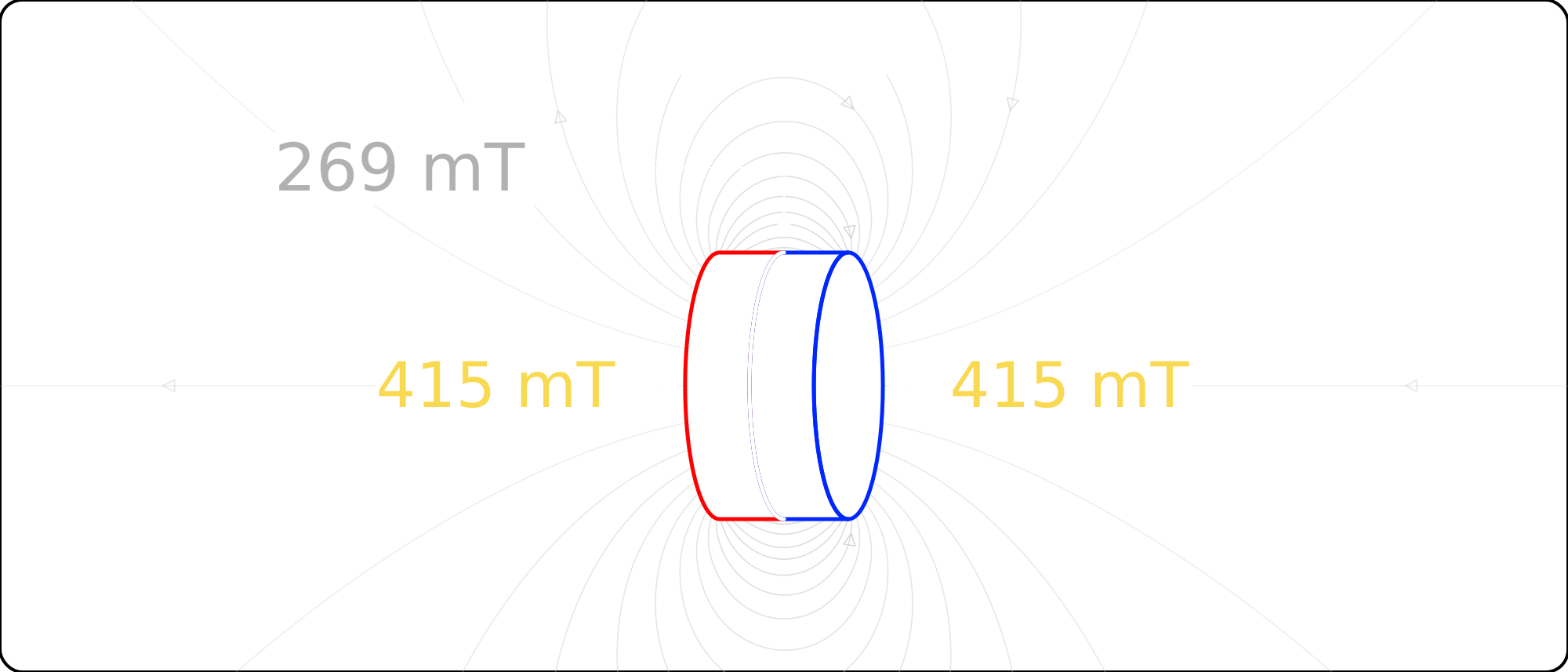
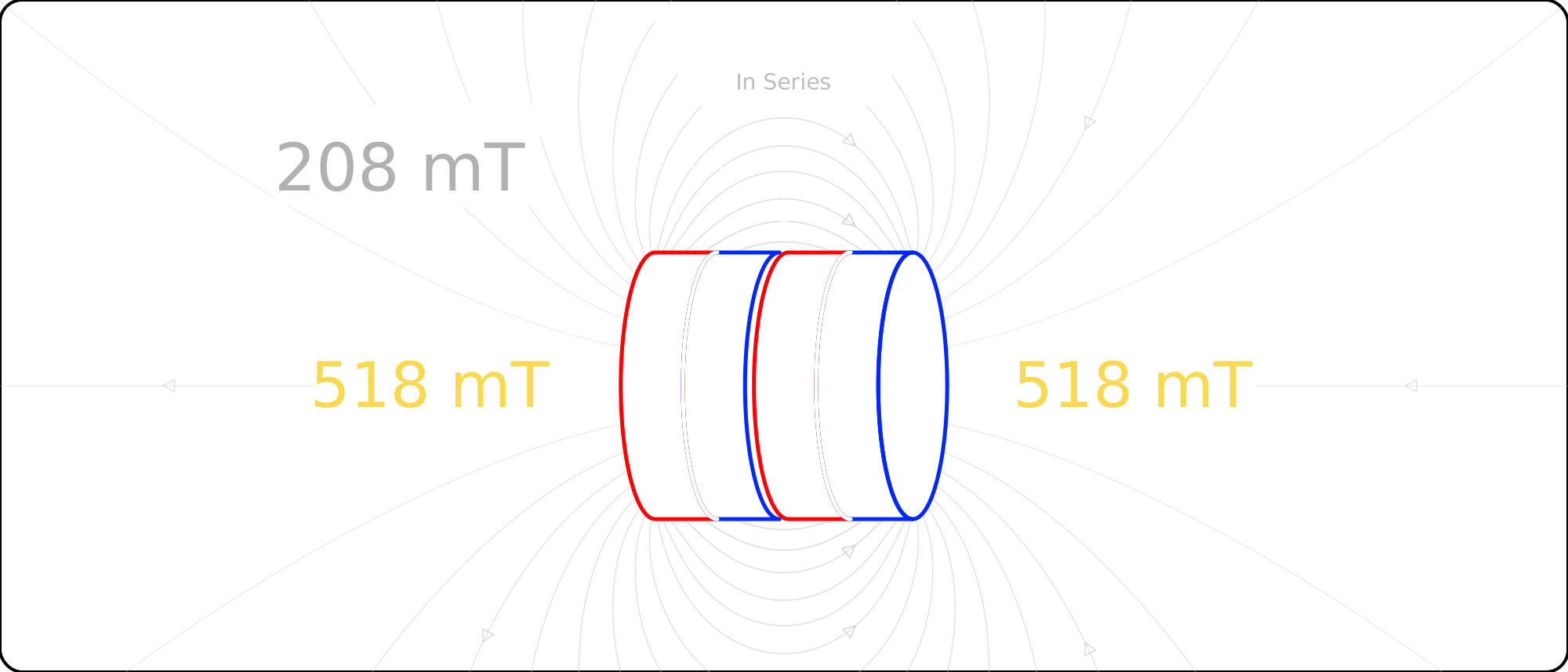
If you take two flat magnets and stick them together, instead of getting a magnet with 4 poles, you now have a 2-pole magnet that is stronger. The middle point is still the weakest part. If you take a bar magnet and a screwdriver, you’ll find the screwdriver is always attracted to the poles much more than to the middle.
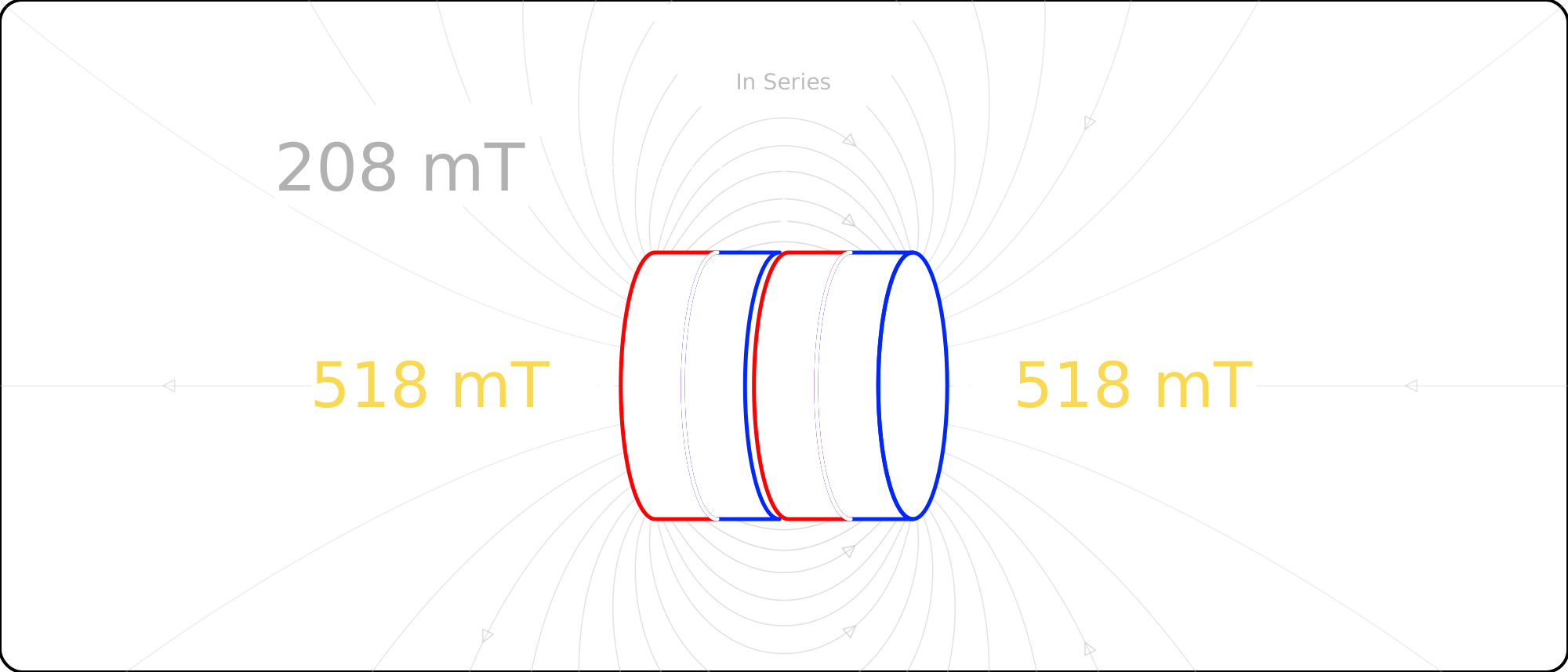
Now, take an inductor, or a coil.
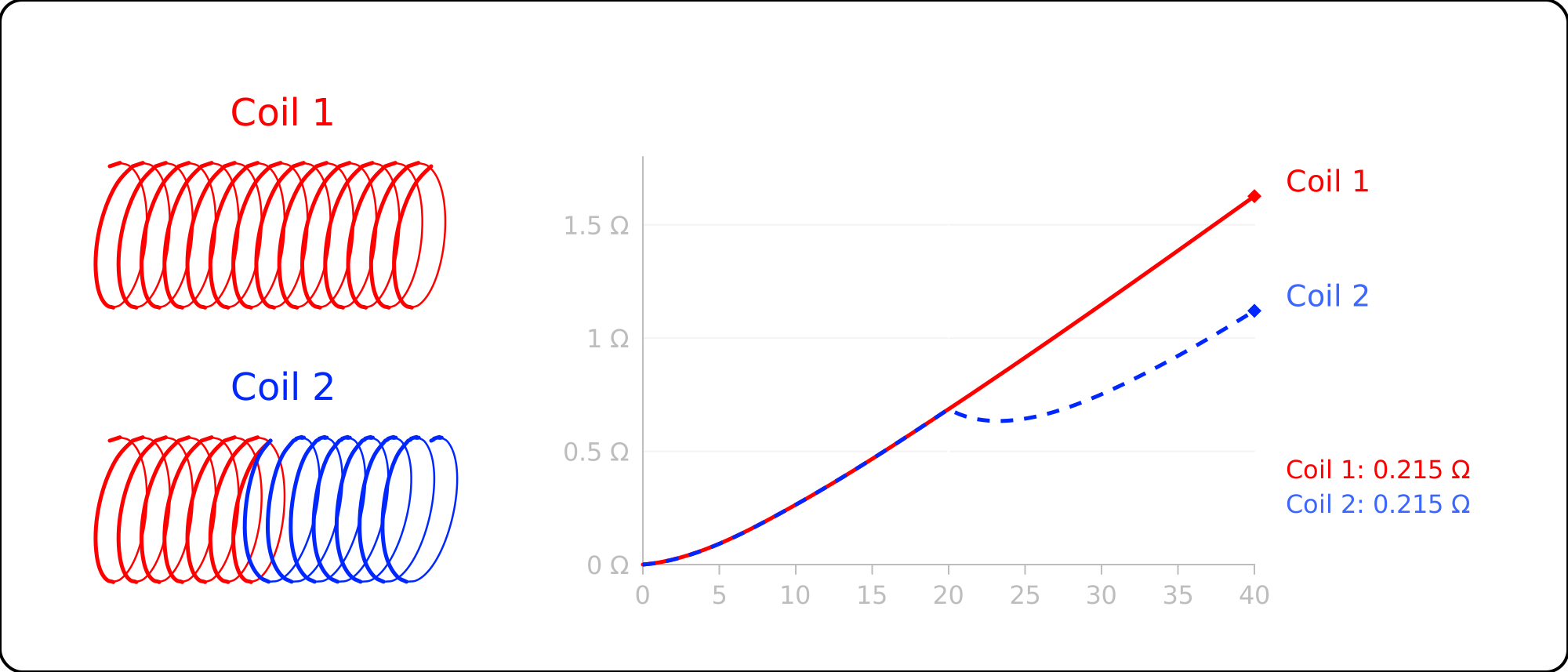
To create a stronger inductor, you need more windings of a coil going in the same direction. If you start to go the other way around halfway through, and you make the same number of turns, you will have created the coil version of an anti-ferromagnet. This is something which cancels its own magnetic field from the outside, despite having organized current, so nothing reaches outward from it. It is organized in an exactly equal and opposite arrangement, so the net field is 0.
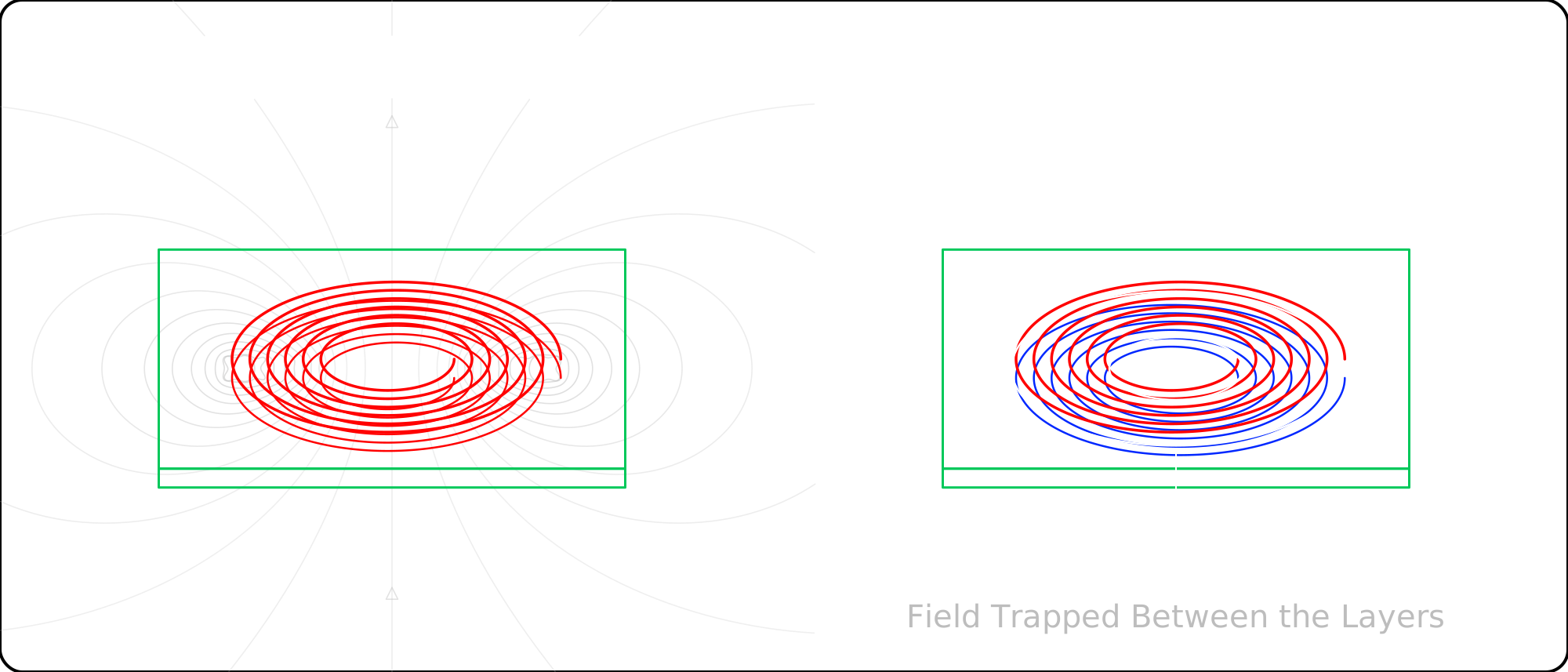
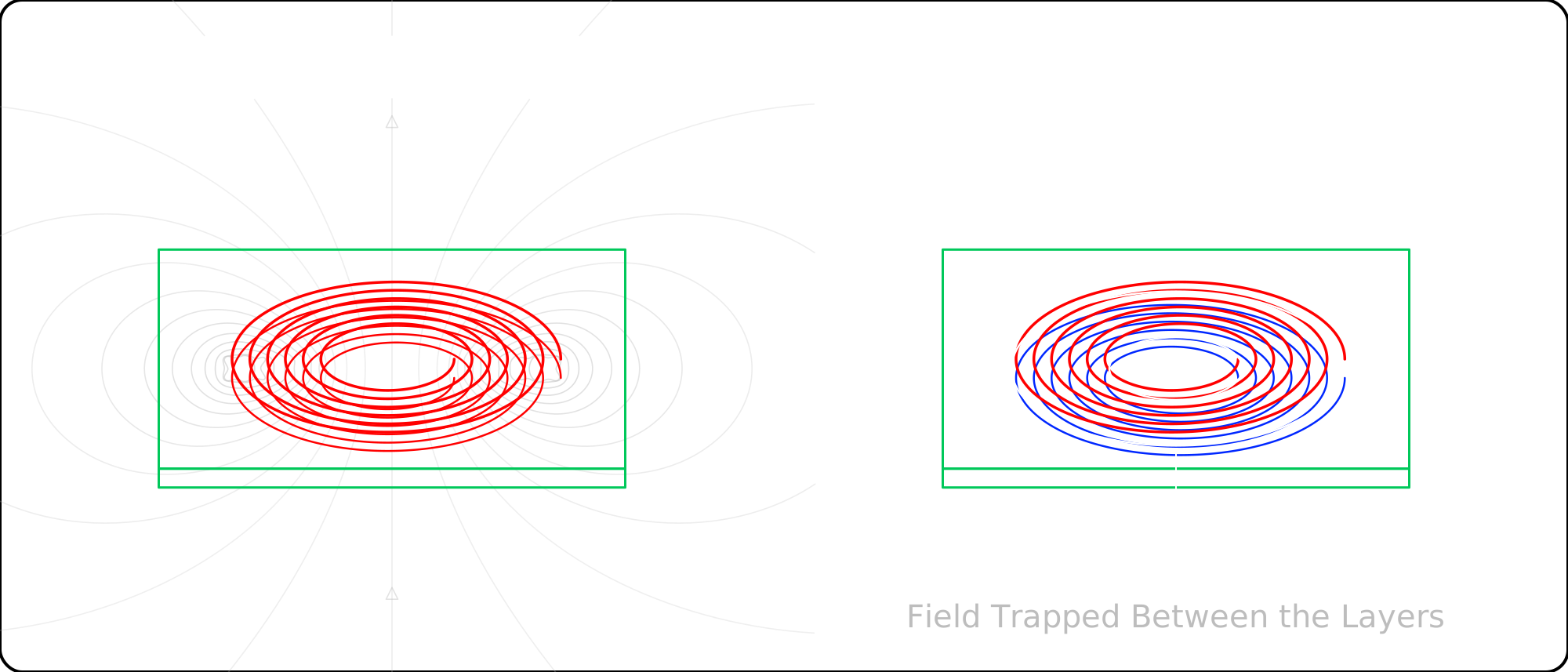
Because there’s no measurable magnetic field, it would be difficult to know you were looking at an anti-ferromagnet if you didn’t already know it was one. The reason we know is that physics already told us about them a long time ago, they’re simple to create, and we have other ways of measuring coils besides their flux when carrying current, such as their frequency response and DC impedance. Basically, we can physically shove current in one end, see what comes out the other side, and know everything about it.
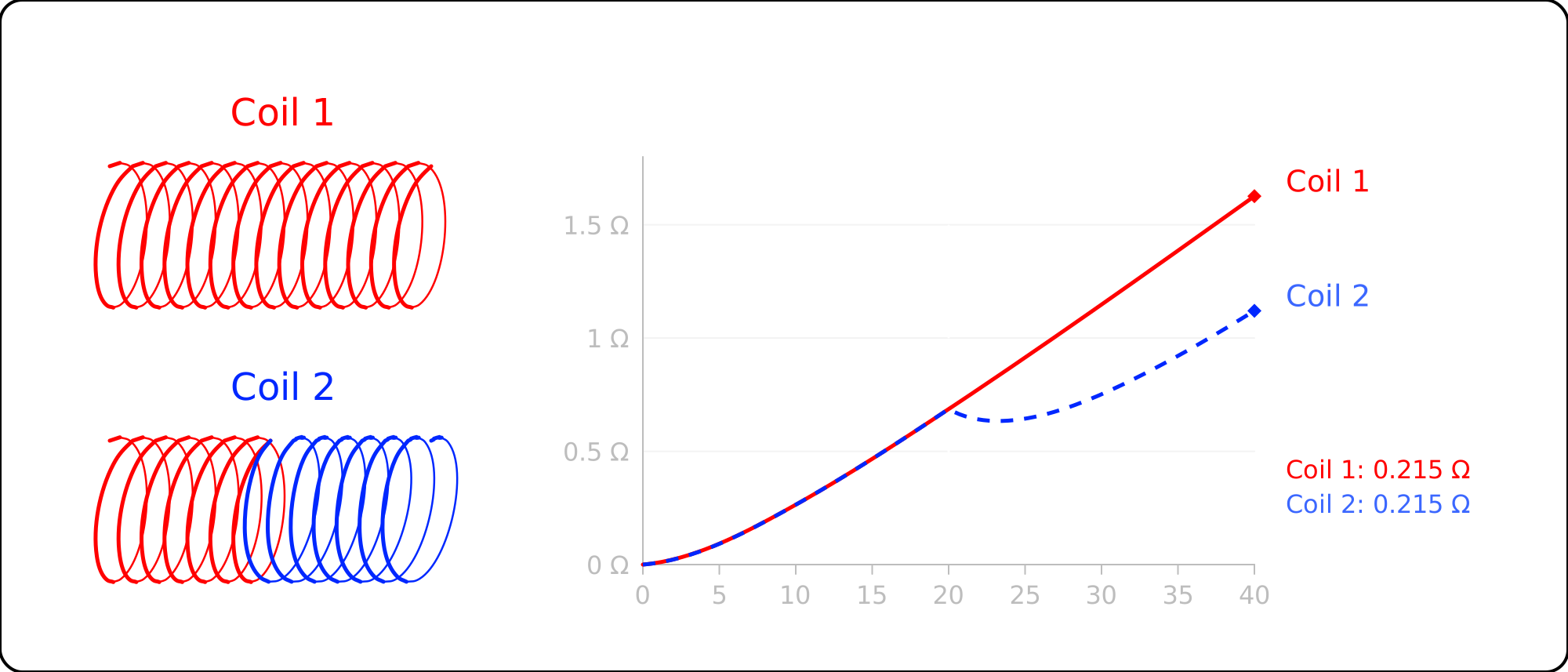
But what if there were materials that showed no signs of being any kind of magnet, yet hidden inside their crystal structure, their spin WAS organized?
Well, the thing is, you can’t test these things very easily. If you didn’t even know that spin could be organized this way, and you didn’t have a good way to look, you might just miss altermagnets entirely. We tend to look for what we are expecting to see. I mean, if it doesn’t look or behave like a magnet or an inductive coil, and any oddities about it can be written off as system errors, how would we even know to look?
Great question. We didn't. We had no idea about altermagnets until 2019, and they weren’t confirmed in a real material until 2024. Their discovery was a small and quirky thing at first. Nobody knew what they were looking at right away, and there wasn’t a framework for talking about them yet, either. The whole field has had to develop quickly as more potential altermagnets are discovered, and their importance and potential usefulness have started to become very clear, very quickly.
So, what the hell is an altermagnet?
Let’s first review a few definitions:
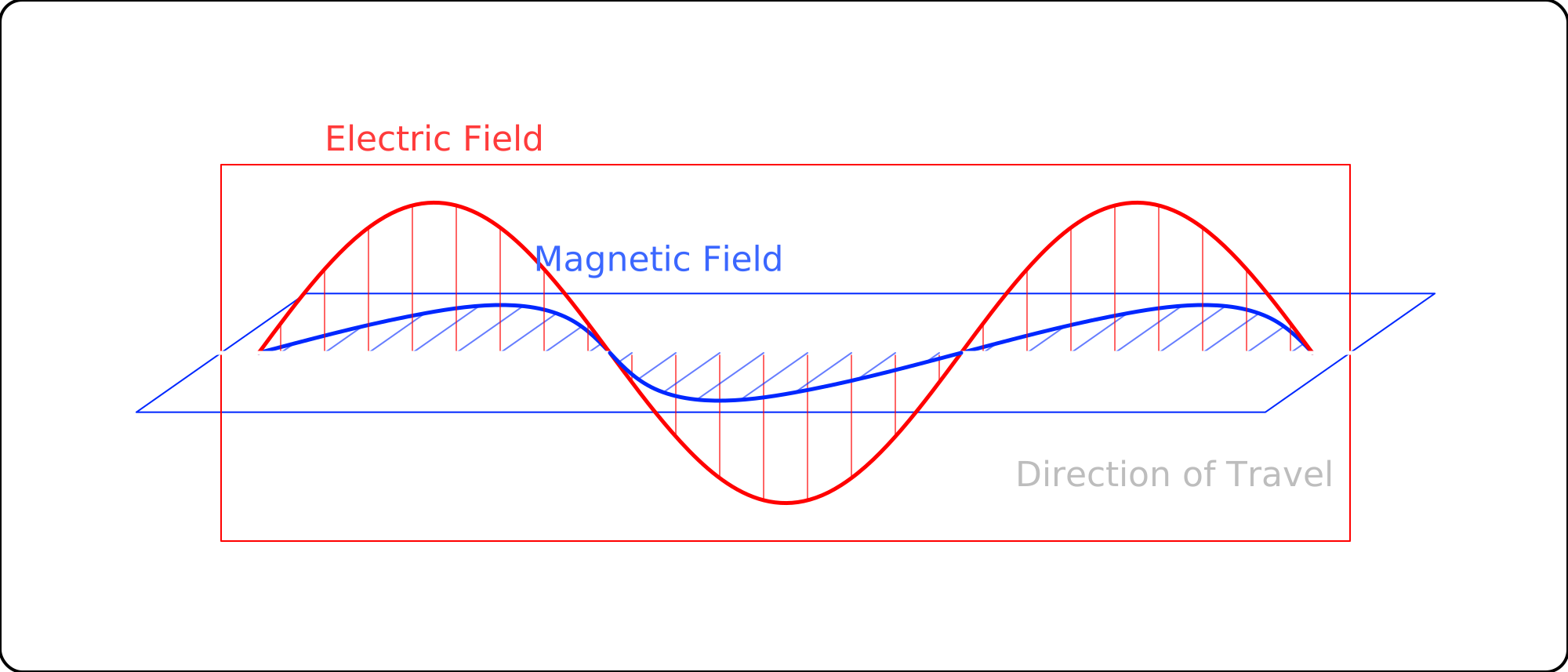
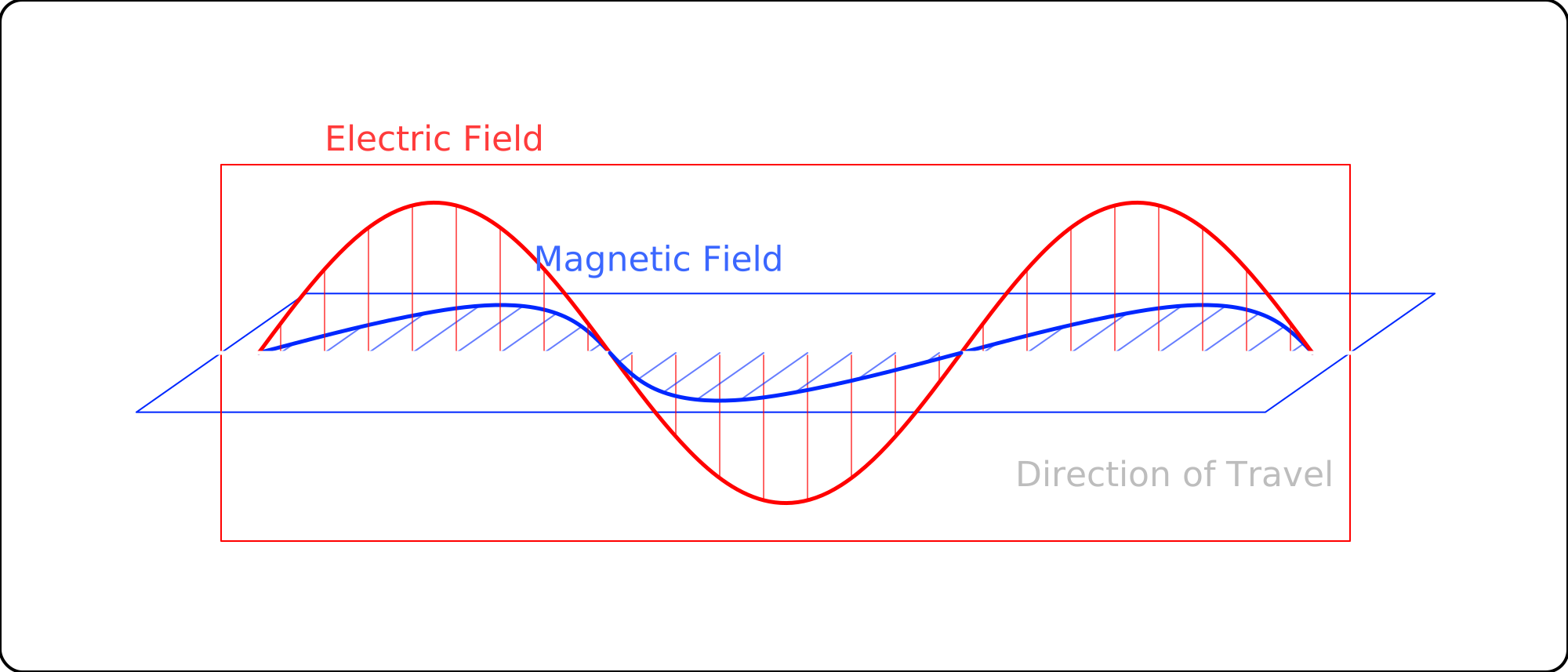
- A magnet: an object whose electrons agree on which way to spin. They either spin up or down, but since the difference between up and down in spin theory is only a relative measurement, when they agree, it would simply be that a magnet is dominantly spin-up. Because of this, it puts out magnetic flux: every electron is a tiny magnet of its own, and when they all agree, their fields add up. A permanent magnet’s field arranges itself the same way as a coil of the same shape carrying DC current. The wiring in your house has magnetic flux too, because it carries current, but a periodic current, like the AC of your house, also has an electric field. Together with the magnetic field, that’s what radio waves are made of. These are the 3 axes of all electromagnetic things.
- 60 Hz hum is a byproduct of your power being periodic. We usually experience it through sharing an electrical pathway with the conductors that carry the current, but it also has measurable magnetic fields and propagates radio waves too.
Which is where the next term should begin to make sense:
- An anti-ferromagnet: this would then be an object whose spins never orient into a dominant direction. At any moment or position throughout, there is no net field, and no spin orientation you can measure from the outside. In other words, its spins are organized, but they cancel so perfectly that it puts out no magnetic flux of its own. Hence, it is anti-ferromagnetic, not just “non-magnetic.” The copper that carries the current powering your house is not a ferromagnet, but it is not an anti-ferromagnet either. As with spin, a current in a wire has direction, so it has flux. A permanent magnet has no current, but its spins are all oriented the same way, so it too has flux.
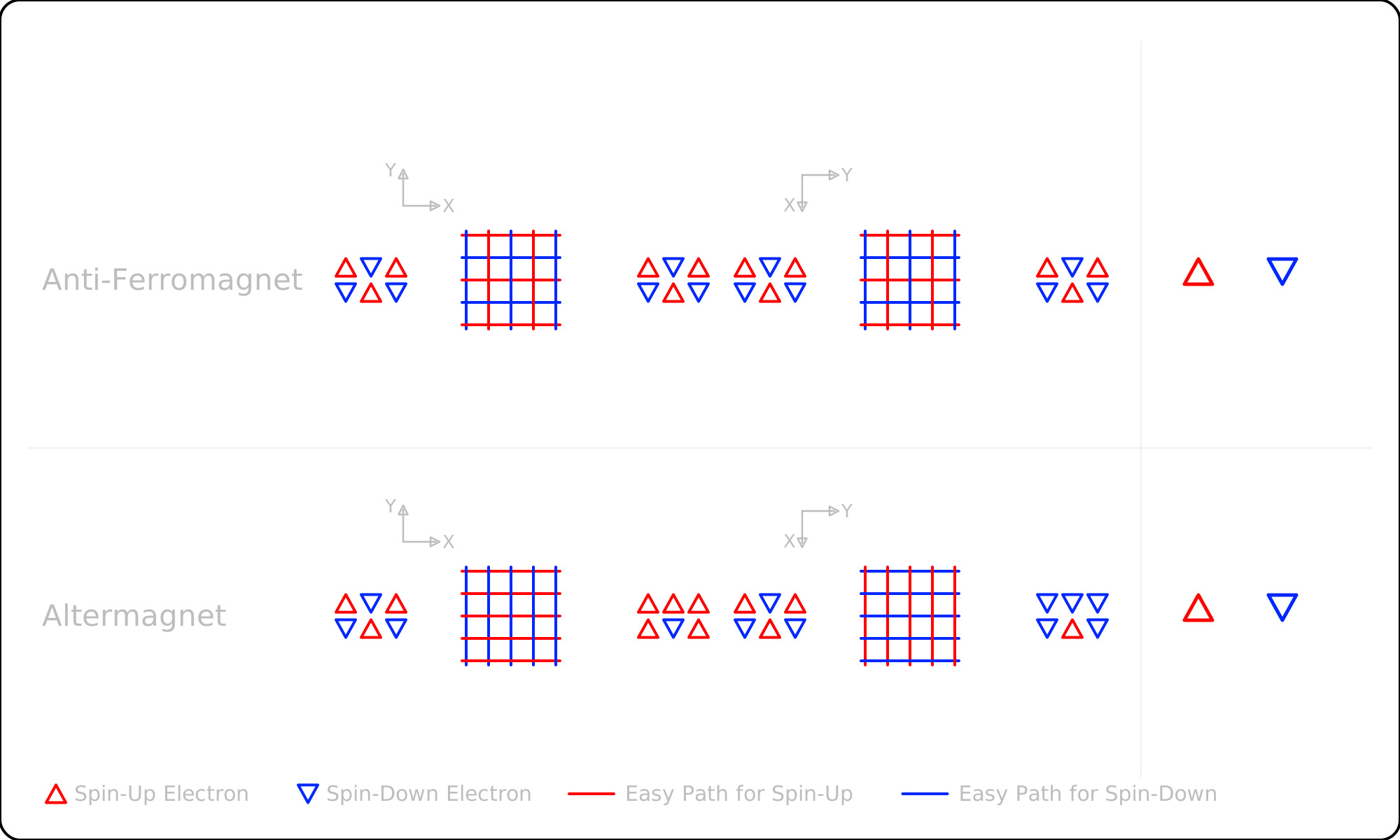
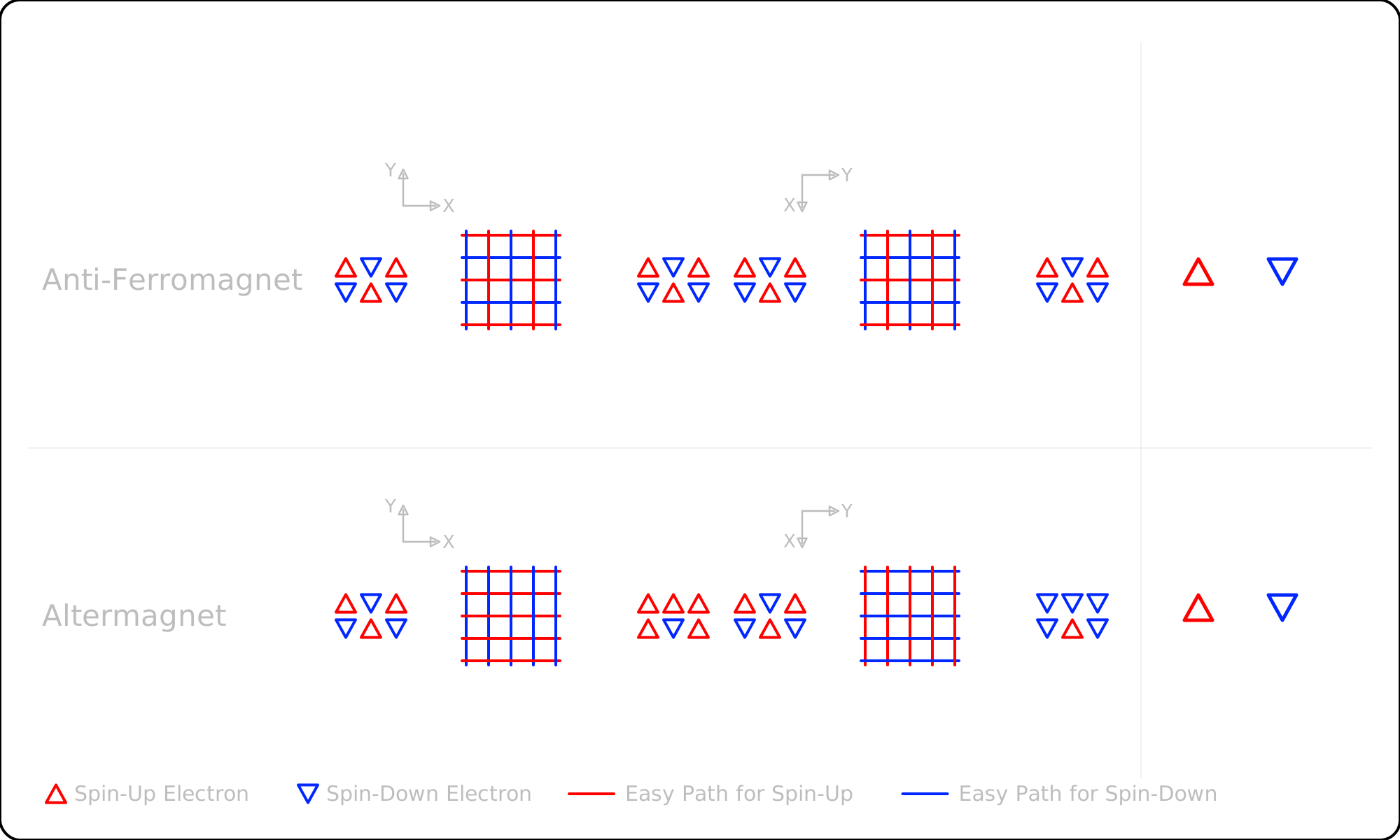
An anti-ferromagnet is equal and opposite, and it’s equal and opposite the same way in every direction. No matter which way you push current through it, spin-up and spin-down electrons get through just as easily. It’s a deadlock. An altermagnet is equal and opposite too. But not all things which spin the same are shaped the same...
Now that we have a framework for understanding what makes something magnetic, non-magnetic, and anti-ferromagnetic, we can finally define the altermagnet.
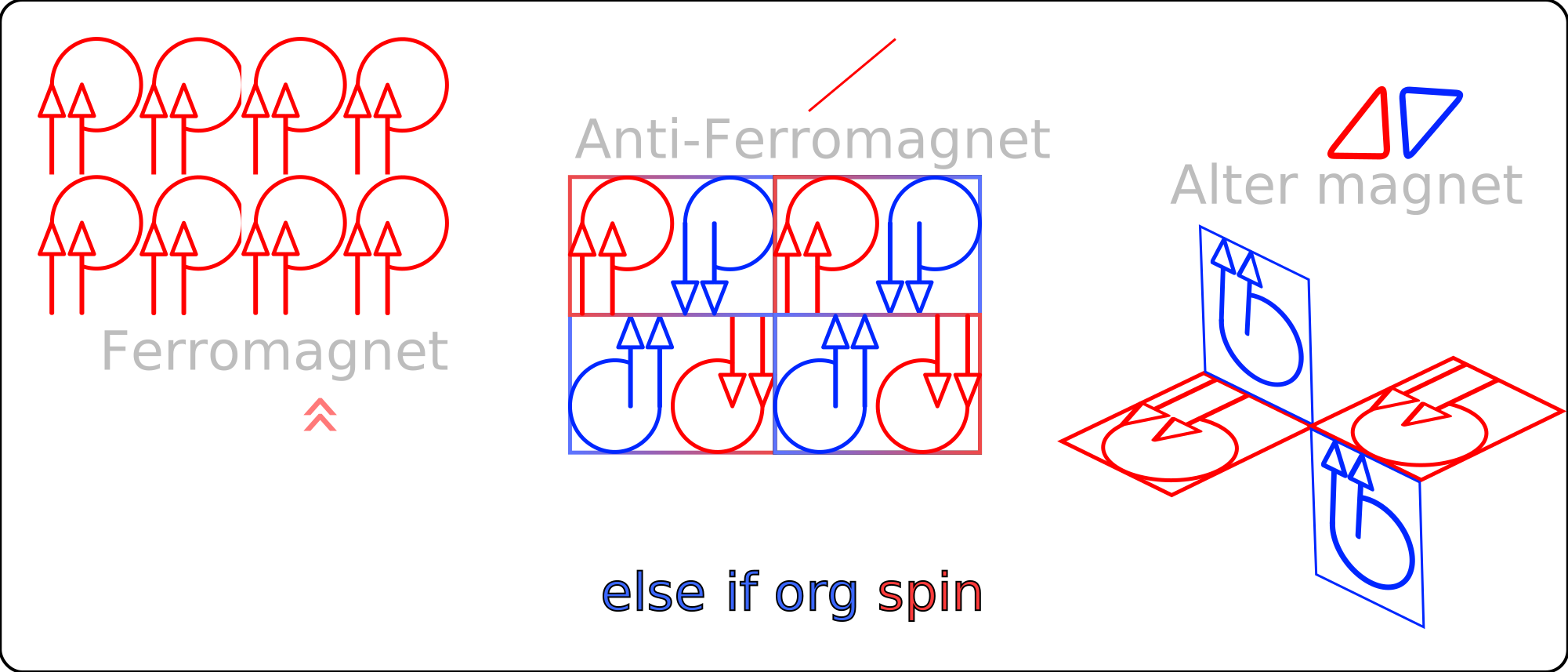
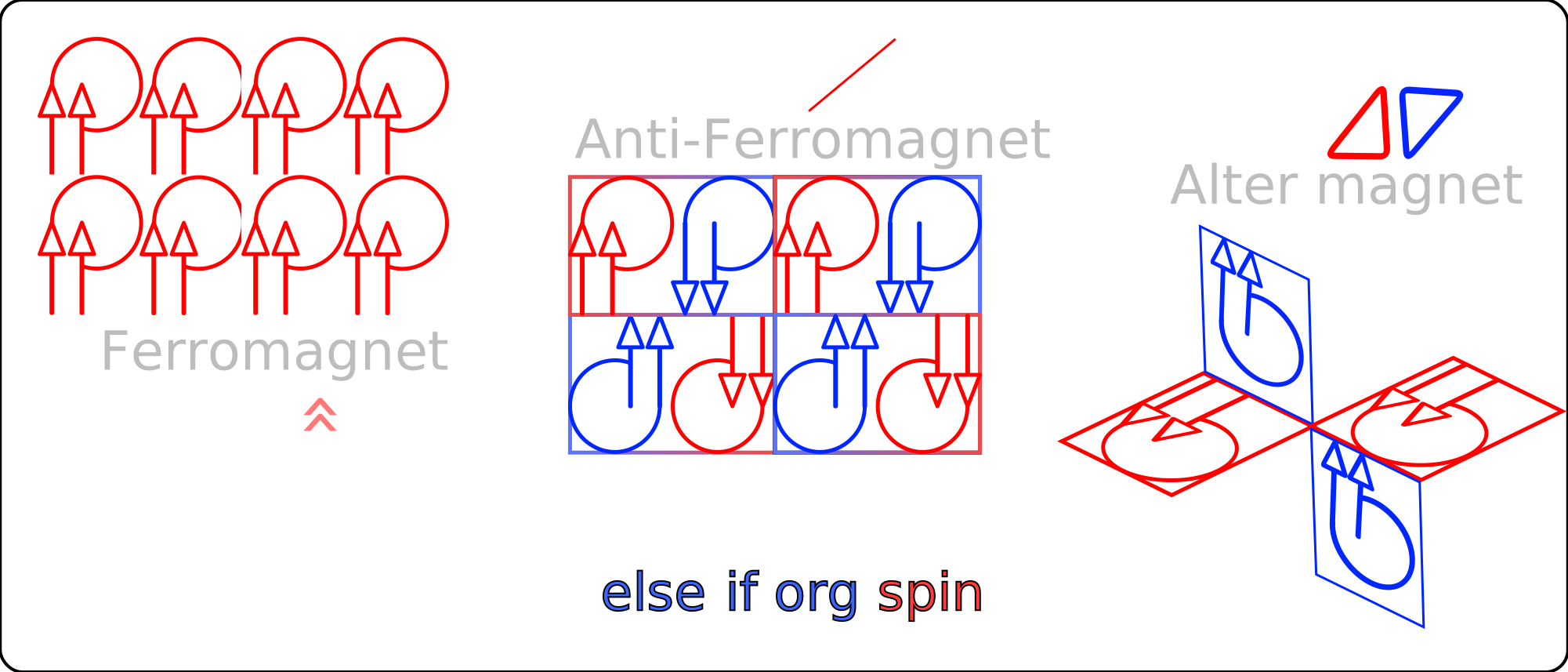
While an altermagnet might not be different when looked at from the outside, even at the smallest scale the spin-up atoms of a crystal physically must exist in their surroundings. Because of this, those surroundings can be stretched one way, and the spin-down atoms sit in surroundings stretched orthogonally, at 90°. So spin-up electrons move more easily along one axis, and spin-down electrons move more easily along the other. It may not sound like much, but any place where there are slight differences in how something behaves gives us a place to plug numbers into the equation. With altermagnets, we now have a new kind of physical material to plug our quantum mechanics into. A function we can actually manipulate in the real world.
We can push current through it along the first axis, and what comes out favors spin-up. Push it along the other axis, and it favors spin-down. Add up every direction and it still balances to zero, so from the outside, its field looks exactly like an anti-ferromagnet’s. But pick a direction, and it’s no longer a deadlock. The possibilities are immense for materials with altermagnetic properties.
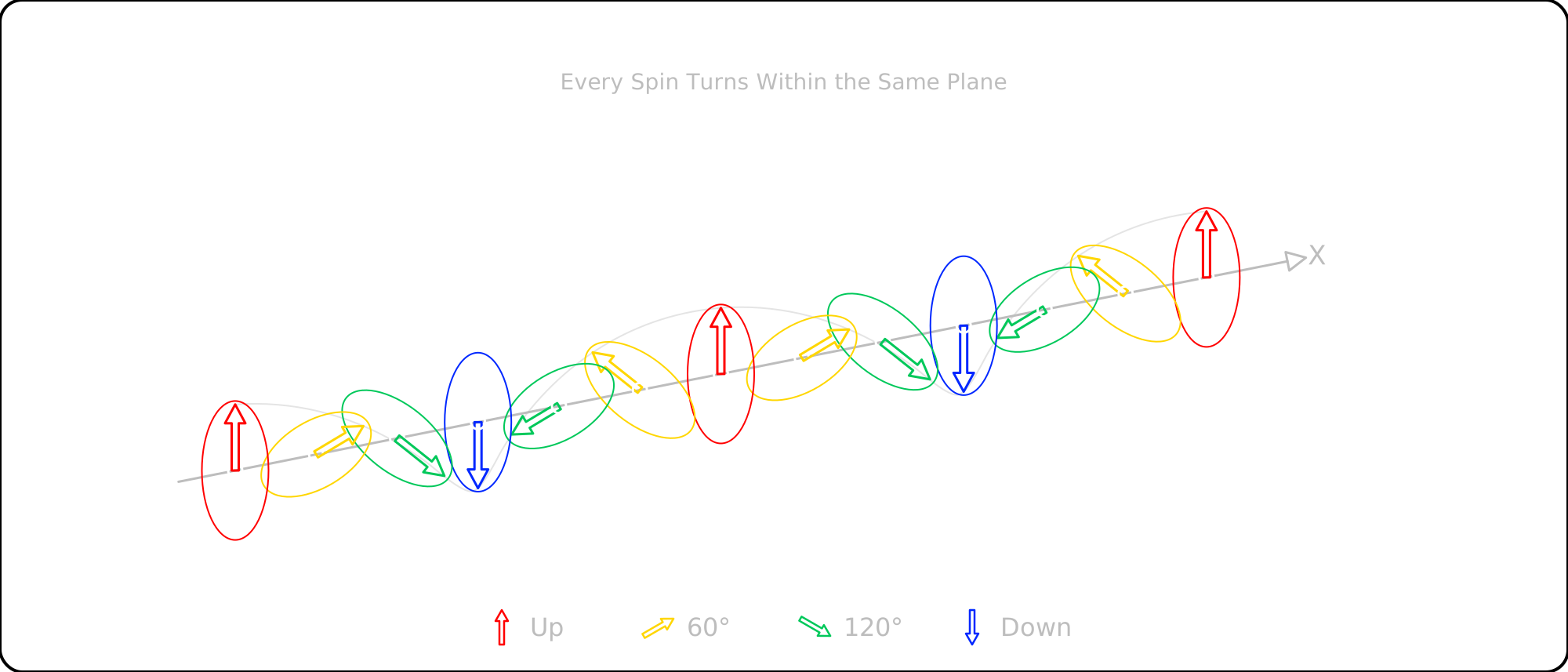
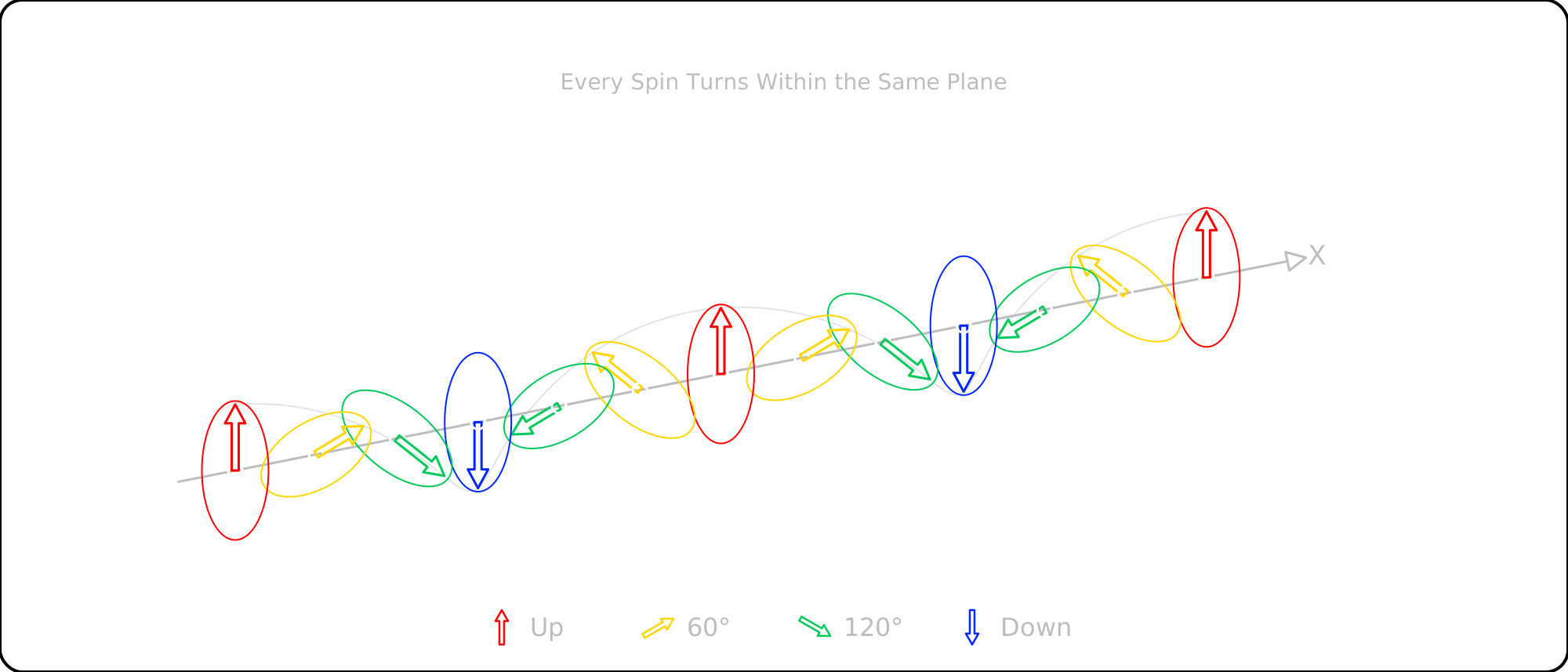
There’s also a close relative of the altermagnet: the p-wave magnet. It has no net field either, but instead of sitting in opposite pairs, its spins turn a little from one atom to the next, like a spiral staircase. . In an altermagnet, the axis you push current along decides which spin comes out favored. In a p-wave magnet, it’s which way along that axis: push current one way and it favors spin-up, push it back the other way and it favors spin-down. The first one was shown in 2025, in nickel iodide, and its twist could be flipped with a voltage. We have not found any that work at room temperature yet.
I’ll draw a final line between two worlds which might have been unclear until now: The world of classical/macro scale physics, and the world of micro/quantum physics.
The distinction between the current in a wire versus the spin in a permanent magnet? That’s the exact difference between the two domains of physics: the current-carrying wire lives in the macro-physics world, and the spin of the permanent magnet lives in the micro, quantum mechanics world. Quantum mechanics is all about things that are smaller than current in wires, specifically, things the size of subatomic particles, such as electrons and their spin. In fact, classical physics on its own predicts that permanent magnets can’t exist at all (look up the Bohr–van Leeuwen theorem). So a fridge magnet is quantum mechanics you can hold in your hand. Altermagnets could give us a physical means of directing electron spin the same way a transistor gives us the means to direct current.